Unbelievably Beautiful: 5 Mountain Destinations with the Most Aesthetic Landscapes on Earth
There are places in the world so beautiful that they defy logic. Landscapes that feel too perfectly composed to be real—where light, color, texture, and form align in a way that seems almost intentional. Among these rare places, mountain destinations stand at the top. Elevated, dramatic, and endlessly expressive, mountains possess an aesthetic power unlike any other natural environment.
This article explores five mountain destinations whose landscapes are so visually stunning, they feel unreal. These are not just tall peaks or famous trekking routes. They are places where every angle looks curated, where clouds behave like artists, and where nature feels like a masterpiece in motion.
These destinations redefine what we mean by “aesthetic”—not as a trend, but as an emotional response to beauty that overwhelms the senses.
What Makes a Mountain Landscape “Aesthetic”?
An aesthetic landscape goes beyond beauty. It creates visual harmony and emotional resonance. In mountain environments, this often comes from a combination of:
- Dramatic elevation and scale
- Clean, powerful silhouettes
- Balanced color palettes
- Interaction between light, shadow, and clouds
- Natural framing through valleys, lakes, or forests
The most aesthetic mountain destinations feel immersive. You don’t just see them—you feel them. They quiet the mind, slow time, and awaken a sense of wonder that is increasingly rare in the modern world.
The five destinations below represent the pinnacle of aesthetic mountain landscapes on Earth.
- The Dolomites, Italy – Where Mountains Look Sculpted by Design
The Dolomites are often described as the most beautiful mountains in Europe—and for good reason. Located in northern Italy, this UNESCO World Heritage site features jagged limestone peaks that rise sharply above alpine meadows, creating landscapes that look intentionally designed rather than naturally formed.
What makes the Dolomites unbelievably aesthetic is their geometry. Unlike rounded or chaotic mountain ranges, these peaks are clean, vertical, and sharply defined. Their pale stone surfaces reflect light in extraordinary ways, especially during sunrise and sunset when the mountains glow pink, orange, and gold—a phenomenon known as enrosadira.
The contrast between sharp peaks and soft green valleys creates perfect visual balance. Add winding trails, wooden cabins, and mist-filled valleys, and every scene feels cinematic.
Photographers, hikers, and designers alike are drawn to the Dolomites because they feel minimal yet dramatic—a rare aesthetic combination.
- Patagonia, Argentina & Chile – Raw Beauty at the Edge of the World
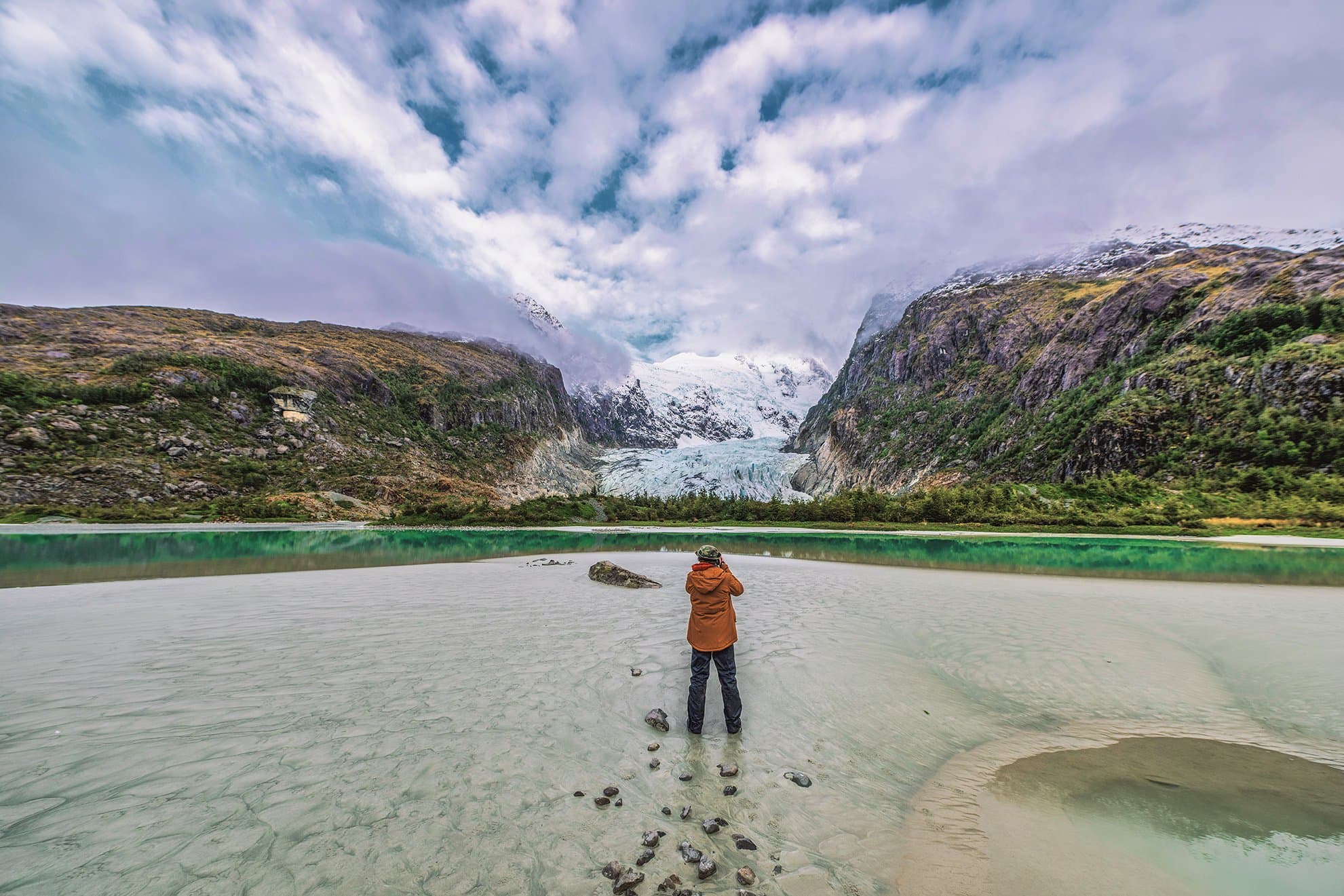
If the Dolomites feel refined and sculptural, Patagonia feels wild, emotional, and untamed. Stretching across southern Argentina and Chile, Patagonia is home to some of the most striking and aesthetically intense mountain landscapes on the planet.
Mountains like Fitz Roy and Cerro Torre rise abruptly from flat plains, creating dramatic vertical contrast. Their jagged granite spires pierce the sky, often surrounded by fast-moving clouds that add tension and mystery to the scene.
What makes Patagonia’s landscape feel “unreal” is its mood. The light changes constantly. Storms roll in and disappear within minutes. Colors shift from deep blues and grays to fiery reds during sunrise.
This unpredictability creates an emotional aesthetic—raw, powerful, and deeply moving. Patagonia doesn’t try to be beautiful. It simply is.
- Mount Fuji Region, Japan – Minimalism in Natural Form
Few mountain landscapes in the world embody aesthetic harmony like Mount Fuji. Rising alone above the Japanese plains, Fuji’s near-perfect symmetry has made it one of the most iconic mountains in history.
What sets Mount Fuji apart is its simplicity. There are no competing peaks, no visual clutter. The mountain stands alone, framed by sky, clouds, and seasonal elements—cherry blossoms in spring, lush greens in summer, fiery foliage in autumn, and snow in winter.
This minimalist composition aligns perfectly with Japanese aesthetic philosophy, where beauty is found in balance, restraint, and impermanence.
Early mornings often reveal Mount Fuji floating above a sea of clouds, creating an almost surreal image. The scene feels meditative, timeless, and impossibly clean—like a painting brought to life.
- The Swiss Alps – Storybook Perfection in Every Direction
The Swiss Alps represent a different kind of aesthetic beauty—one rooted in perfection and balance. Snow-capped peaks, emerald valleys, turquoise lakes, and charming alpine villages come together to create landscapes that feel almost fictional.
What makes the Swiss Alps so visually appealing is cohesion. Everything fits. The scale of the mountains feels grand but not overwhelming. Human elements—chalets, trains, bridges—blend seamlessly into the environment, enhancing rather than disrupting the scenery.
From viewpoints like Jungfraujoch, Zermatt, and Lauterbrunnen Valley, clouds often settle below the peaks, creating the sensation of standing above the world. Waterfalls cascade down sheer cliffs, adding movement and texture to the landscape.
The Swiss Alps are aesthetic in a comforting, almost dreamlike way—like stepping into a perfectly illustrated storybook.
- Zhangjiajie Mountains, China – A Real-Life Fantasy Landscape
If there is one mountain destination that truly feels “not real,” it is Zhangjiajie National Forest Park in China. Famous for inspiring the floating mountains in the movie Avatar, this landscape consists of thousands of tall sandstone pillars rising straight up from mist-filled valleys.
What makes Zhangjiajie so aesthetically shocking is its vertical repetition. The sheer number of towering pillars creates a pattern that feels impossible. When fog drifts between them, the mountains appear to float, disconnecting entirely from the ground.
The landscape constantly changes with weather and light. One moment it feels mystical and ancient; the next, dramatic and futuristic.
Zhangjiajie challenges our understanding of what mountains are supposed to look like, making it one of the most visually unique destinations on Earth.
Why These Landscapes Feel “Too Beautiful to Be Real”
The reason these destinations feel unreal is not just their beauty—but how rarely we encounter such harmony in everyday life. Modern environments are often noisy, cluttered, and overstimulating. Aesthetic mountain landscapes offer the opposite: clarity, scale, and silence.
They slow us down. They invite observation. They remind us that beauty does not need explanation.
Psychologically, humans are wired to respond strongly to environments that offer both complexity and order—a balance these mountain destinations achieve effortlessly.
The Emotional Impact of Aesthetic Mountain Landscapes
Standing in front of an unbelievably beautiful mountain landscape often triggers unexpected emotions. Awe, humility, gratitude, and even tears are common responses.
These environments shift perspective. Problems feel smaller. Time feels slower. Priorities realign.
Many travelers describe these places as “reset points”—moments where the mind clears and the heart opens. This emotional resonance is what turns a destination into a lifelong memory.
Aesthetic Landscapes in the Age of Social Media
While aesthetic mountain destinations are often shared on social media, their true impact cannot be captured through a screen. Photos may inspire travel, but the real experience is immersive and deeply personal.
Ironically, the most aesthetic landscapes often encourage people to put their cameras down and simply look.
This is why such destinations remain powerful despite overexposure—they speak to something deeper than trends.
Sustainable Beauty and Responsibility
As interest in aesthetic destinations grows, so does the responsibility to protect them. These landscapes are fragile. Climate change, over-tourism, and pollution threaten their balance.
Experiencing aesthetic beauty should inspire respect—not consumption. Traveling mindfully ensures that these places remain unreal in the best way possible.
Conclusion: When Nature Becomes Art
The five mountain destinations explored in this article prove that nature is the greatest artist of all. Their landscapes are not just beautiful—they are emotionally and visually transformative.
They challenge logic, awaken imagination, and remind us that the world still holds places capable of leaving us speechless.