Torres del Paine, Chile – Where the Earth Touches the Sky
Introduction: Standing on the Edge of the World
There are few places on Earth that truly take your breath away — places where nature feels raw, wild, and untouched. Torres del Paine National Park, in the remote south of Patagonia, Chile, is one of those rare wonders.
Imagine colossal granite towers piercing the sky, turquoise lakes shimmering like jewels, and windswept plains stretching endlessly toward the horizon. This is a land where condors soar, glaciers crackle, and the air feels so pure it almost stings your lungs.
They call it “Where the Earth Touches the Sky.”
And once you’ve stood beneath those towering peaks, you’ll understand why.
This is not just another travel destination — it’s a pilgrimage for nature lovers, hikers, photographers, and anyone seeking that humbling reminder of how grand the world can be.
1. Welcome to Patagonia’s Wild Heart
Torres del Paine sits in southern Chilean Patagonia, one of the most remote and jaw-droppingly beautiful regions on the planet. It’s a place of dramatic contrasts — jagged mountain peaks, vast glaciers, emerald forests, and golden grasslands alive with wildlife.
The park itself covers nearly 700 square miles (1,800 km²), and every inch feels like a scene from a National Geographic documentary. It’s part of the greater Patagonian wilderness, where wind, ice, and time have carved out a landscape that’s both fierce and fragile.
UNESCO recognized its significance in 1978 by declaring it a World Biosphere Reserve — and stepping inside, it’s easy to see why. Here, nature reigns supreme. The Wi-Fi is weak, the wind is strong, and your soul feels utterly alive.
2. The Towers That Define a Nation
The park takes its name from its most iconic feature: the Torres del Paine, or “Towers of Paine.”
These are three massive granite spires — rising nearly 2,800 meters (9,200 feet) above sea level — that dominate the skyline and define the park’s identity. “Paine” (pronounced Pie-nay) means “blue” in the native Tehuelche language, a fitting name for mountains that shift color with the light — silver at sunrise, golden at noon, and purple by dusk.
For many travelers, reaching the base of these towers is the ultimate goal — a once-in-a-lifetime trek that rewards effort with one of the most awe-inspiring views on Earth.
When you finally stand before them, reflected in the icy lagoon below, you’ll understand that no photo can ever capture the power of this place.
3. Getting There: The Journey to the End of the World
Reaching Torres del Paine isn’t easy — but that’s part of its charm.
The nearest gateway is the town of Puerto Natales, about 70 miles (112 km) south of the park. Most visitors arrive via Punta Arenas, which has flights from Santiago. From there, it’s a scenic 3-hour bus or car ride through empty, wind-swept plains dotted with guanacos (wild llamas).
Once you reach the park, the adventure truly begins. Roads are mostly gravel, and distances are vast — but every turn offers a postcard view. Snow-capped peaks, glassy lakes, and wild skies accompany you everywhere.
If you ever wondered what “the edge of the world” looks like, this is it.
4. The W Trek and the O Circuit: Hiking Legends
Torres del Paine is a hiker’s paradise, and two routes reign supreme: the W Trek and the O Circuit.
🥾 The W Trek
Named for its shape, this 4–5 day trek covers about 80 km (50 miles) and hits the park’s greatest hits:
• The Base of the Towers,
• The French Valley,
• And the Grey Glacier.
It’s the perfect blend of challenge and reward — steep climbs, glacial winds, and jaw-dropping views around every bend. Each day brings a different landscape: crystal lakes one morning, dense forests the next, and glaciers the day after that.
🏕️ The O Circuit
For those craving the full Patagonian immersion, the O Circuit circles the entire massif in 7–9 days. You’ll cross mountain passes, camp under starlit skies, and encounter far fewer people.
It’s demanding, unpredictable, and utterly unforgettable.
Whichever route you choose, one thing’s for sure — you’ll return changed. Patagonia has that effect.
5. Wildlife Encounters: Nature’s Untamed Kingdom
One of the most thrilling parts of exploring Torres del Paine is its incredible wildlife.
You’ll often spot guanacos grazing in herds along the plains, or rheas (Patagonian ostriches) running gracefully through the grass. Overhead, mighty Andean condors glide effortlessly on the winds, their wingspans stretching nearly 10 feet.
If you’re lucky (and patient), you might even catch a glimpse of the elusive Patagonian puma — the park’s apex predator. In recent years, the puma population has grown, and guided wildlife tours now offer ethical chances to see them in their natural habitat.
Other residents include:
🦊 Grey foxes,
🦌 Huemul deer (a Chilean national symbol),
🦅 Caracaras,
And plenty of curious hares and armadillos.
It’s a wild symphony of life in one of Earth’s last true sanctuaries.
6. The Weather: Wild, Fierce, and Unforgiving
Let’s be honest — the weather in Torres del Paine has a mind of its own.
Locals joke that you can experience all four seasons in a single day — and they’re not exaggerating. The wind can roar like a freight train one minute, then the sun breaks through the clouds the next.
🌤️ Summer (December–February) is peak hiking season — long daylight hours and relatively mild temperatures around 10–18°C (50–65°F).
🍂 Autumn (March–April) brings fiery colors and fewer crowds.
❄️ Winter (June–August) transforms the park into a frozen wonderland — quiet, pristine, and magical for photographers.
No matter when you come, pack layers. Patagonia demands respect — and rewards it generously.
7. Mirador Base Torres: The Iconic Hike
If you only have time for one trek, make it the Mirador Base Torres.
This is the classic hike — an 8-hour round trip that climbs through forests, across rivers, and up a steep moraine to the famous viewpoint at the base of the towers.
The final climb is tough — your legs will burn, your lungs will protest — but when you crest that last ridge and see the three granite spires rising above the glacial lake, every step feels worth it.
Most hikers arrive at sunrise to watch the towers glow fiery orange as the first light hits them. It’s one of those rare travel moments where silence feels sacred — everyone simply stands in awe, humbled by nature’s power.
8. Glaciers and Lakes: The Park’s Frozen Jewels
Beyond the towers, Torres del Paine is home to some of Patagonia’s most mesmerizing glacial landscapes.
🧊 Grey Glacier
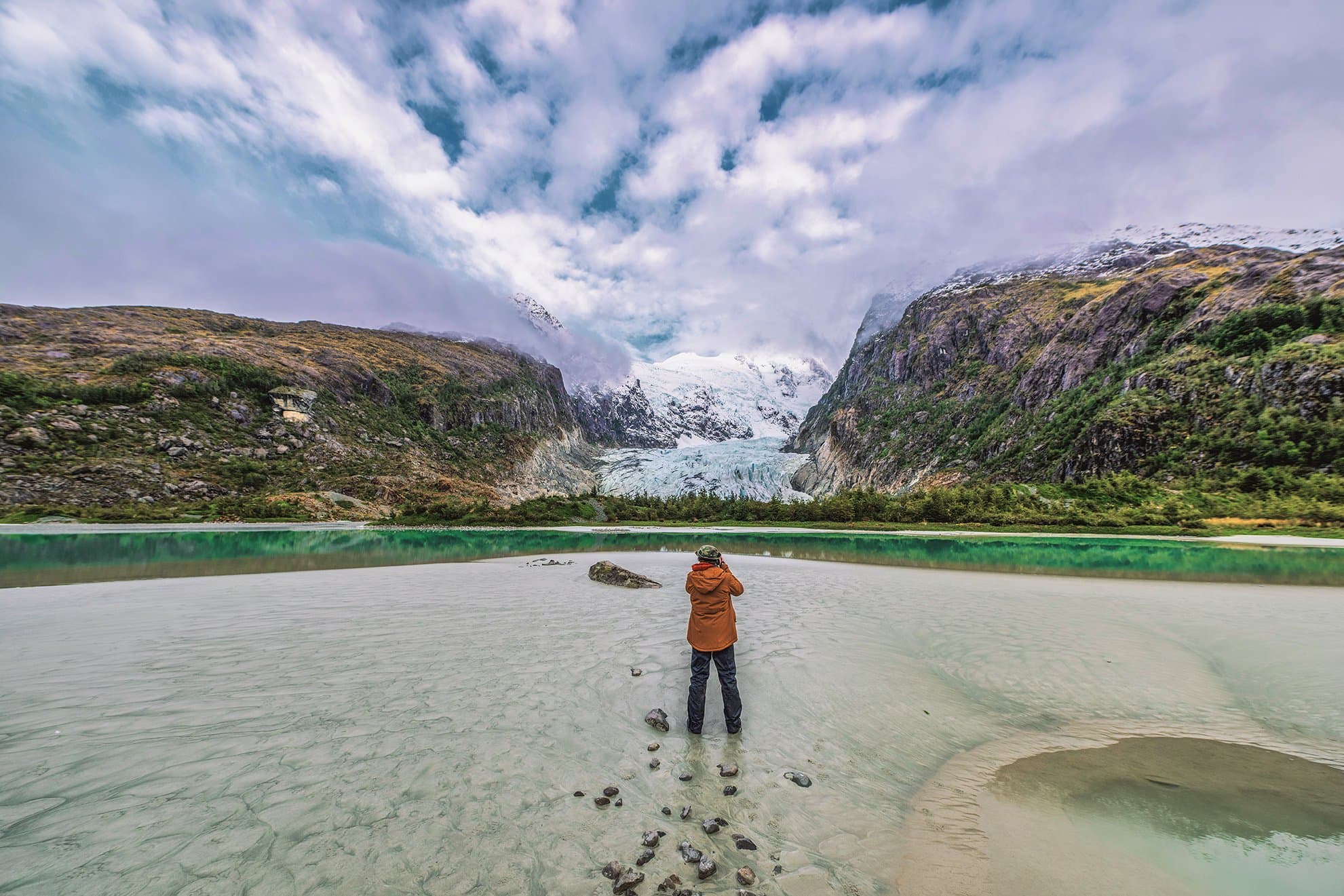
Flowing from the vast Southern Patagonian Ice Field, Grey Glacier is a must-see. You can hike along its shores, kayak among floating icebergs, or take a boat tour that sails right up to its towering ice wall.
As you drift close, you’ll hear the deep, echoing cracks of ice calving — like thunder rolling through the valley. It’s an unforgettable sound, a reminder that nature here is alive and ever-changing.
💎 Lago Pehoé and Lago Nordenskjöld
These lakes are pure magic — their turquoise waters contrast sharply with the jagged peaks above. Perfect spots for photography, picnics, or simply sitting in silence as the wind whips across the water.
9. Eco-Lodges and Camping Under the Stars
Whether you’re a hardcore trekker or a comfort-loving explorer, Torres del Paine offers accommodation for every style.
🏕️ Camping:
There are several campgrounds along the W and O treks, complete with tent platforms, cooking areas, and mountain views. Waking up to the sight of glaciers glowing in dawn light is worth every chilly night.
🏡 Eco Domes and Refugios:
For a middle-ground experience, stay in refugios (mountain huts) or eco-domes. These cozy shelters offer beds, hot meals, and a community of fellow hikers sharing stories by candlelight.
🏨 Luxury Lodges:
If you’re seeking comfort with adventure, Explora Patagonia, Tierra Patagonia, and EcoCamp offer stunning lodges with panoramic views, gourmet meals, and guided excursions — all sustainably operated.
In Torres del Paine, even luxury feels grounded, connected to the land.
10. Patagonia’s Colors: A Photographer’s Dream
Torres del Paine is one of the most photogenic places on Earth.
Every hour, the light shifts — painting the mountains, glaciers, and lakes in new shades. The sunrise over the Torres, the alpenglow on Cuernos del Paine, the reflections on Lago Pehoé — it’s nature’s masterpiece.
Photographers often call this place “addictive”. Once you start capturing its beauty, you never want to stop.
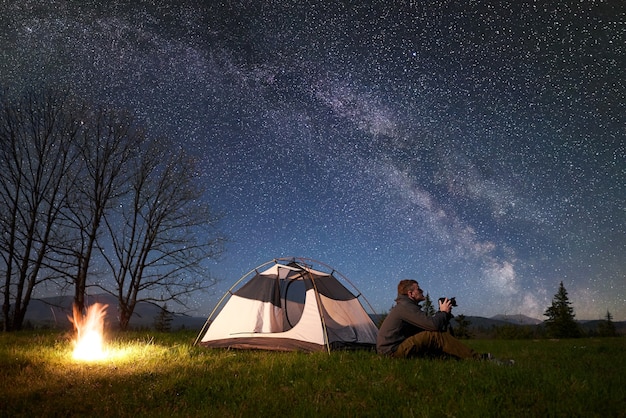
If you love astrophotography, stay overnight — the remote location and minimal light pollution make for jaw-dropping views of the Milky Way stretching across the sky.
At night, when the wind quiets and stars shimmer above the granite towers, it truly feels like the Earth is touching the sky.
11. The Spirit of the Gauchos
Patagonia isn’t just about landscapes — it’s also about its people.
The gauchos, or Patagonian cowboys, are an enduring symbol of this region. Rugged, quiet, and deeply connected to the land, they’ve herded sheep and cattle across these vast plains for generations.
You’ll often spot them riding horses in traditional berets and ponchos, moving gracefully across terrain that would break lesser spirits.
Some estancias (ranches) near the park welcome visitors, offering horseback rides, traditional asados (barbecues), and glimpses into a timeless way of life.
It’s a cultural experience that adds soul to the scenery.
12. Flora and Fauna: Life at the Edge of Extremes
Despite the harsh climate, Torres del Paine bursts with life.
Springtime brings carpets of wildflowers — yellow daisies, purple lupines, and red firebush that contrast beautifully against the icy peaks.
The forests are alive with Magellanic woodpeckers, while the wetlands host flamingos, swans, and ducks. Even the scrublands hold surprises, from foxes to tiny orchids.
Every part of the ecosystem feels delicately balanced — thriving in one of Earth’s most unforgiving environments.
13. Sustainability: Protecting the Wild
Tourism has grown rapidly here, but conservation is at the heart of Torres del Paine’s future.
Park rangers and local organizations work tirelessly to protect its fragile ecosystems. Campers are encouraged to follow Leave No Trace principles, and strict fire bans help prevent devastating blazes.
Many lodges now operate with renewable energy, composting systems, and minimal waste practices — proving that luxury and sustainability can coexist.
Visiting Torres del Paine isn’t just about taking — it’s about giving back, preserving the magic for generations to come.
14. The Silence of Patagonia
There’s a special kind of silence here — not emptiness, but presence.
When you pause along the trail and the wind stills, you hear the subtle rhythm of the earth: water trickling from melting ice, the cry of a distant bird, the heartbeat of nature itself.
It’s in that silence that Patagonia speaks loudest. It reminds you how small you are — and how beautiful that smallness can feel.
15. When to Visit: Finding Your Perfect Season
• Summer (Dec–Feb): Best weather, long days, busiest trails.
• Autumn (Mar–Apr): Golden colors, fewer tourists, crisp air.
• Winter (Jun–Aug): Quiet, icy beauty, perfect for solitude seekers.
• Spring (Sep–Nov): Blooming landscapes and active wildlife.
Each season reveals a different side of Torres del Paine — there’s no “wrong” time, only the one that calls to your spirit.
16. Tips for First-Time Explorers
✅ Book early: Lodges and campsites fill up months in advance.
✅ Pack layers: Weather changes fast — bring windproof gear.
✅ Carry snacks & water: Trails are long and wild.
✅ Respect wildlife: Observe from a distance.
✅ Stay flexible: Patagonia’s weather decides the plan, not you.
Above all — come with an open heart. Patagonia rewards those who embrace the unexpected.
17. Beyond the Park: More Patagonia Adventures
If you have extra time, the region around Torres del Paine offers even more magic:
🧭 Puerto Natales: A charming base town with great food, cozy cafés, and a laid-back vibe.
🧊 Perito Moreno Glacier (Argentina): Just across the border, one of the most accessible and dramatic glaciers in the world.
🦙 El Calafate and El Chaltén: Famous for world-class hiking and Mount Fitz Roy.
🐧 Magdalena Island: Home to thousands of adorable Magellanic penguins.
Every road leads to another wild adventure.
18. The Moment You’ll Never Forget
Every traveler who visits Torres del Paine remembers one moment — that instant when it hits you:
This is the most beautiful place I’ve ever seen.
Maybe it’s the sunrise over the towers, the wind in your hair on the Grey Glacier, or a quiet night under a billion stars.
For me, it was standing on a ridge above Lago Pehoé, the sky painted pink and gold, the wind whispering through the grass. In that instant, everything felt perfectly still — and I understood what it meant when they said this is “Where the Earth Touches the Sky.”
Conclusion: Patagonia’s Eternal Magic
Torres del Paine is not just a destination — it’s an experience that leaves an imprint on your soul.
It’s a reminder that wild places still exist — places where mountains defy gravity, where time slows down, and where silence speaks louder than words.
When you leave, you’ll carry more than photos. You’ll carry a feeling — a deep connection to something vast, ancient, and pure.
So if you ever crave an adventure that humbles and heals you, pack your boots, follow the wind south, and let Torres del Paine show you what it means to truly touch the sky.
Because in Patagonia, you don’t just see the Earth — you feel it breathe. 🌍💙