Travel Notes from Patagonia: Discovering “Paradise” at the End of the World
There are places on Earth that feel less like destinations and more like revelations. Patagonia is one of them. Often described as “the end of the world,” this vast and remote region at the southern tip of South America defies expectations in every possible way. Harsh yet beautiful, wild yet deeply calming, Patagonia is a place where nature feels untouched, time slows down, and the idea of paradise takes on a completely new meaning.
This is not a typical travel guide. These are travel notes from Patagonia—a personal journey through wind-swept plains, towering mountains, turquoise lakes, and moments of quiet awe. It is the story of discovering a kind of paradise not defined by comfort or luxury, but by raw beauty, solitude, and emotional clarity.
First Impressions: Reaching the Edge of the Map
Arriving in Patagonia feels like stepping off the map. The cities thin out, the roads stretch endlessly, and the landscape begins to dominate every thought. The sky feels bigger here—wide, dramatic, and constantly changing. The wind, famous and relentless, greets you like a reminder: this land follows its own rules.
From the moment I arrived, Patagonia felt different. Not louder or more exciting, but deeper. There is a quiet intensity to the region. It doesn’t try to impress you; it simply exists, unapologetically vast and wild.
Driving through Patagonia for the first time is humbling. Miles of open land roll by, interrupted only by distant mountain silhouettes. Civilization feels fragile here, and nature feels eternal.
The Meaning of “End of the World”
Patagonia is often labeled as “the end of the world,” but the phrase is misleading. It suggests emptiness or desolation. In reality, Patagonia feels like the beginning of something essential.
Here, you are forced to slow down. The distances are long. The weather is unpredictable. Plans change constantly. At first, this can feel frustrating. Then, gradually, it becomes freeing.
At the end of the world, urgency fades. There is nowhere else to be. No shortcuts. No distractions. Only the present moment and the vast landscape unfolding in front of you.
El Chaltén: Where Mountains Define the Rhythm of Life
My journey truly began in El Chaltén, a small village in Argentine Patagonia often called the trekking capital of the country. The town sits quietly beneath some of the most dramatic peaks on Earth—Mount Fitz Roy and Cerro Torre.
In El Chaltén, life revolves around the mountains. The weather dictates plans. Sunrise determines wake-up times. Conversations in cafés are about trails, wind, and clouds.
Hiking here feels intimate despite the grandeur. Trails lead through lenga forests, alongside glacial rivers, and up to viewpoints where jagged granite spires pierce the sky. Mount Fitz Roy, especially at sunrise, is unforgettable. As the first light hits its sharp edges, the mountain glows red and gold, as if on fire.
Standing there, watching that light, I felt something shift. It wasn’t excitement—it was recognition. A sense that this is what untouched beauty looks like.
Learning from the Wind and the Silence
Patagonia teaches patience. The wind is a constant presence, sometimes gentle, sometimes overwhelming. It reminds you that control is an illusion here.
There are moments when the landscape is completely silent—no cars, no voices, no technology. Just the sound of wind brushing grass and the distant cracking of ice from a glacier.
In those moments, thoughts surface naturally. Not forced, not dramatic—just clear. Patagonia has a way of stripping life down to its essentials. Eat. Walk. Rest. Observe.
That simplicity feels luxurious in a world obsessed with speed.
Torres del Paine: Nature at Its Most Dramatic
Crossing into Chilean Patagonia brought me to Torres del Paine National Park, a place that feels almost mythological. The landscape here is bold and theatrical: granite towers, electric-blue lakes, massive glaciers, and wide-open valleys.
Every turn feels cinematic. The Torres themselves—three sharp stone pillars rising vertically from the earth—are awe-inspiring. Seeing them for the first time, especially at sunrise, feels surreal. The light slowly creeps across the stone, transforming cold gray rock into warm shades of orange and pink.
But what struck me most was the contrast. Brutal winds followed by complete stillness. Dark storm clouds breaking suddenly into clear blue skies. Patagonia constantly reminds you that beauty and chaos coexist.
Walking Through a Living Landscape
Hiking in Patagonia is not just about reaching viewpoints. It’s about moving through a living, breathing landscape.
Glaciers groan and shift. Rivers change color depending on the light. Clouds race across the sky. Guanacos graze quietly in the distance.
You don’t feel like a conqueror here. You feel like a guest.
That sense of humility is powerful. Patagonia doesn’t revolve around human presence. And that, paradoxically, makes you feel more connected—not less.
The Color of Water: Patagonia’s Glacial Lakes
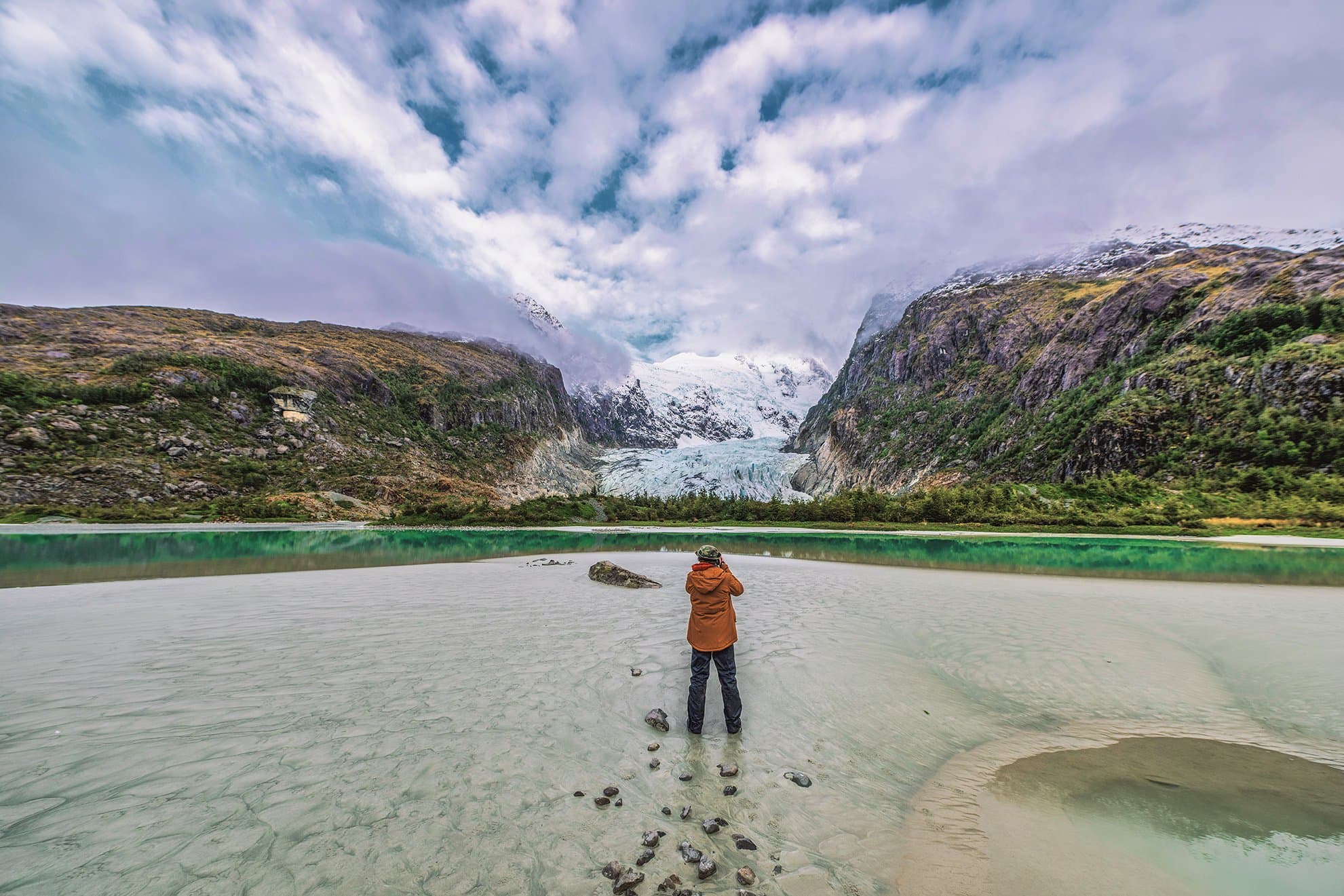
One of Patagonia’s most surreal features is its water. Lakes here are not simply blue—they are turquoise, milky, emerald, and sometimes almost white.
This color comes from glacial sediment, finely ground rock carried by meltwater. The result is water that looks painted, unreal.
Standing by Lake Pehoé or Laguna de los Tres, I remember thinking that no photograph could fully capture this color. It changes with the clouds, the wind, the time of day.
The water feels alive, responsive, emotional.
Evenings at the Edge of Nowhere
Evenings in Patagonia are quiet. After long days of walking, there is a gentle exhaustion that feels earned.
In small towns, nights are spent in simple lodges, sharing meals with travelers from around the world. Conversations are unhurried. Stories flow easily.
There is a shared understanding among those who come here: Patagonia is not about checking boxes. It’s about presence.
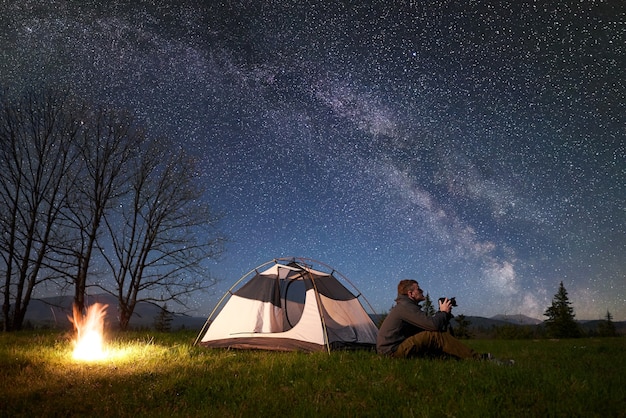
Outside, the sky stretches endlessly. Stars appear in numbers rarely seen elsewhere. The Milky Way feels close, almost personal.
Redefining “Paradise”
Before Patagonia, my idea of paradise was shaped by comfort—warm weather, ease, predictability. Patagonia challenged that definition completely.
Paradise, I realized, is not always gentle. Sometimes it is wild, cold, and demanding. Sometimes it pushes you physically and emotionally.
But in that challenge, there is clarity. In Patagonia, I felt more grounded than I had in years. More aware. More alive.
Paradise, at the end of the world, is not about escape. It is about returning—to yourself.
Lessons Patagonia Leaves Behind
Patagonia does not shout its lessons. It whispers them through wind, distance, and silence.
It teaches:
- That nature does not need to be tamed to be appreciated
- That slowness is not laziness
- That solitude can be healing
- That beauty can exist without human approval
These lessons linger long after you leave.
Leaving Patagonia, Carrying It With You
Leaving Patagonia is emotional. Not because it was easy, but because it was honest.
As the landscapes fade behind you, something remains. A memory of wide skies. Of cold air filling your lungs. Of standing small beneath massive peaks and feeling perfectly okay with that.
Patagonia stays with you—not as a place, but as a perspective.
Why Patagonia Feels Like a Sacred Place
There are few places left in the world where nature feels truly dominant. Patagonia is one of them.
It reminds us that the planet is bigger than our routines, our schedules, our concerns. And that realization is deeply comforting.
In a time when so much feels artificial and rushed, Patagonia offers something rare: authenticity.
Conclusion: Paradise Found at the End of the World
These travel notes from Patagonia are not meant to convince you to go—though they might. They are meant to describe what happens when you reach a place where the world feels raw and real again.
At the end of the world, I didn’t find emptiness.
I found clarity.
I found stillness.
I found a version of paradise I didn’t know I was looking for.