Not Just Everest! Here Are 7 Little-Known but Incredibly Photogenic Mountain Peaks
When people think about iconic mountain photography, one name almost always comes to mind: Mount Everest. As the highest peak on Earth, Everest has become a symbol of adventure, endurance, and natural grandeur. Its image dominates travel brochures, documentaries, and social media feeds around the world.
But the truth is this: the world is filled with stunning mountain peaks that are just as photogenic—if not more so—than Everest, yet remain largely unknown to the mainstream traveler. These mountains may not hold world records for height, but they possess something equally powerful: dramatic shapes, unique geological features, magical lighting, and breathtaking settings that make photographers fall in love at first sight.
In this article, we explore seven of the most photogenic mountain peaks in the world that rarely receive global attention. These hidden giants offer extraordinary visual beauty, rich cultural stories, and unforgettable perspectives—without the crowds.
Why “Photogenic” Matters More Than Height
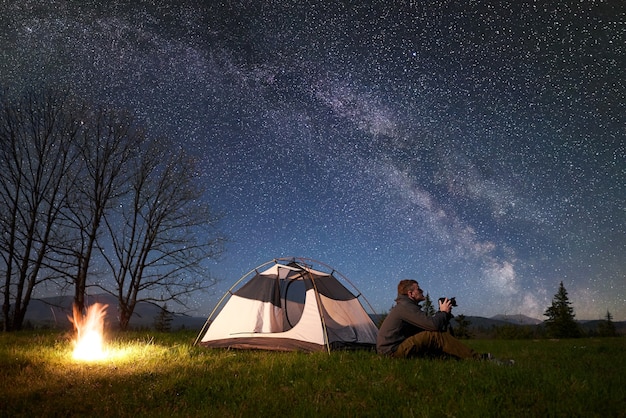
Height alone does not determine a mountain’s visual impact. In photography, what truly matters are shape, texture, light, contrast, and atmosphere. A sharp spire rising from mist, a solitary peak reflected in still water, or a mountain framed by clouds and stars can be far more striking than a taller but visually crowded summit.
Photogenic mountains often:
- Have unique silhouettes
- Stand isolated from surrounding peaks
- Interact dramatically with clouds and light
- Change color during sunrise and sunset
- Blend beautifully with lakes, forests, or deserts
The seven peaks below embody these qualities perfectly.
- Mount Assiniboine, Canada – The “Matterhorn of the Rockies”
Tucked away in the Canadian Rockies on the border of British Columbia and Alberta, Mount Assiniboine is often called the Matterhorn of North America. Its sharply pointed pyramid shape rises majestically above alpine meadows, turquoise lakes, and dense forests.
What makes Assiniboine incredibly photogenic is its isolation. Unlike many peaks in crowded ranges, it stands apart, dominating the landscape with clean lines and dramatic symmetry. Early mornings often bring low-lying fog, creating mirror-like reflections in nearby Lake Magog.
Despite its beauty, Mount Assiniboine remains relatively unknown outside of Canada. Access requires hiking or helicopter travel, which keeps crowds minimal and preserves its pristine visual appeal.
- Mount Fitz Roy, Argentina – Patagonia’s Sharpest Icon
While Patagonia is famous among adventure travelers, Mount Fitz Roy remains underappreciated by the wider public compared to Everest or the Alps. Rising abruptly from the Patagonian plains, Fitz Roy’s jagged granite spires create one of the most dramatic mountain profiles on Earth.
Photographers love Fitz Roy because of its ever-changing moods. Clouds move rapidly, sometimes hiding the mountain entirely, only to reveal it seconds later bathed in golden or fiery red light during sunrise.
The surrounding landscape—glacial lakes, windswept valleys, and wild terrain—adds depth and scale to every image. Fitz Roy does not need extreme height to command attention; its form alone tells a powerful visual story.
- Mount Roraima, Venezuela – A Mountain from Another World
Mount Roraima looks less like a mountain and more like a natural monument from a science-fiction film. This massive tabletop mountain, known as a tepui, rises vertically from the rainforest, with sheer cliffs and a flat summit often wrapped in mist.
What makes Roraima so photogenic is its contrast. The smooth, vertical walls meet rolling clouds, while waterfalls spill dramatically from its edges. From afar, the mountain appears to float above the jungle.
The summit itself offers surreal photographic opportunities, featuring strange rock formations, rare plant life, and an otherworldly atmosphere. Despite its visual uniqueness, Mount Roraima remains one of the least photographed major peaks in the world.
- Mount Ama Dablam, Nepal – The Most Elegant Himalayan Peak
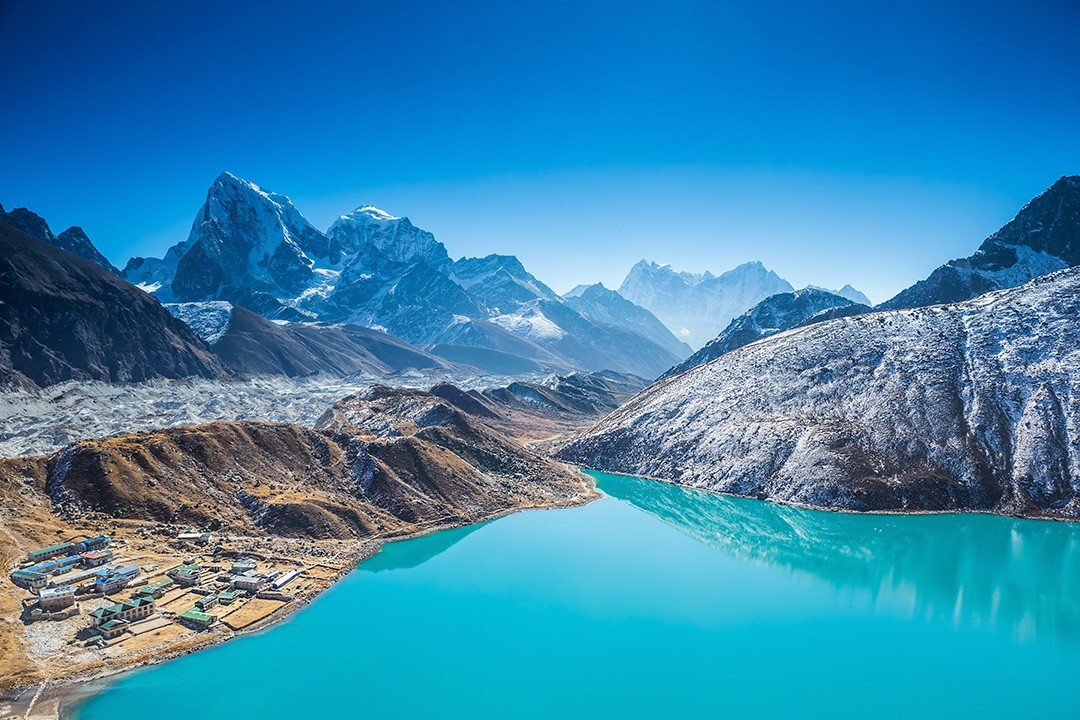
Hidden in the shadow of Everest, Mount Ama Dablam is often described as the most beautiful mountain in the Himalayas. Its elegant shape, with long ridges and a hanging glacier resembling a necklace, makes it exceptionally photogenic.
Ama Dablam rises prominently above the Khumbu Valley, offering striking compositions from villages like Pangboche and Dingboche. Unlike Everest, which often appears bulky in photos, Ama Dablam looks graceful and sculpted.
During sunrise and sunset, its icy faces catch the light beautifully, creating dramatic contrasts of gold, blue, and shadow. Many photographers who visit the Everest region end up taking more photos of Ama Dablam than Everest itself.
- Mount Kirkjufell, Iceland – The Perfectly Framed Peak
Few mountains are as instantly recognizable to photographers as Mount Kirkjufell in Iceland. Despite its modest height, this arrow-shaped peak has become famous among landscape photographers for its perfect symmetry and surroundings.
What elevates Kirkjufell’s photogenic appeal is its setting. Waterfalls in the foreground, the ocean nearby, and the possibility of northern lights dancing overhead make it a dream subject.
Light changes rapidly in Iceland, and Kirkjufell transforms with the seasons—green in summer, snowy in winter, and glowing under midnight sun or aurora borealis. While the location has gained attention, the mountain itself remains relatively unknown in broader global mountain rankings.
- Mount Bromo, Indonesia – A Volcanic Dreamscape
Located in East Java, Mount Bromo offers one of the most surreal mountain landscapes in the world. Rather than towering sharply, Bromo sits within a vast volcanic caldera known as the Sea of Sand.
What makes Mount Bromo incredibly photogenic is its atmosphere. Thick mist, smoking craters, and dramatic light during sunrise create images that feel almost otherworldly. From nearby viewpoints, the volcano appears to float above clouds and ash-covered plains.
The combination of volcanic texture, spiritual ceremonies of the Tengger people, and constantly shifting light makes Mount Bromo a favorite among photographers—yet it remains lesser known compared to iconic global peaks.
- Mount Cook (Aoraki), New Zealand – A Photographer’s Alpine Paradise
Aoraki / Mount Cook, New Zealand’s highest mountain, is often overshadowed internationally by the Alps and Himalayas. However, from a photography standpoint, it is one of the most rewarding peaks in the world.
Surrounded by glaciers, alpine lakes, and wide open skies, Mount Cook offers endless compositional possibilities. Lake Pukaki and Lake Matheson provide stunning reflections, especially during calm mornings.
The mountain’s sharp ridges, combined with fast-moving clouds and dramatic weather, create a constantly changing visual experience. At night, the region’s dark skies allow for spectacular astrophotography, with Mount Cook silhouetted against the Milky Way.
Why These Mountains Remain Underrated
Many of the world’s most photogenic peaks remain unknown because they are:
- Less accessible
- Not the tallest in their region
- Located far from major cities
- Overshadowed by famous neighbors
However, for photographers and travelers seeking originality, these mountains offer something rare: authentic beauty without overexposure.
In an age of social media repetition, discovering and photographing lesser-known peaks provides a deeper sense of connection and creativity.
The Future of Mountain Photography
As travelers seek more meaningful and sustainable experiences, interest in lesser-known destinations continues to grow. Photogenic peaks like these represent the future of mountain travel—places where beauty, solitude, and respect for nature coexist.
By looking beyond Everest, we open ourselves to a richer and more diverse understanding of the world’s mountain landscapes.
Conclusion: Beauty Beyond Fame
Mount Everest will always hold its legendary status, but beauty does not belong to one mountain alone. Across the globe, countless peaks rise quietly, offering scenes of extraordinary elegance and visual power.
These seven mountains remind us that true beauty often exists beyond the spotlight. For those willing to explore, observe, and wait for the right light, the world’s most photogenic mountains are waiting—patiently and silently—to be discovered.